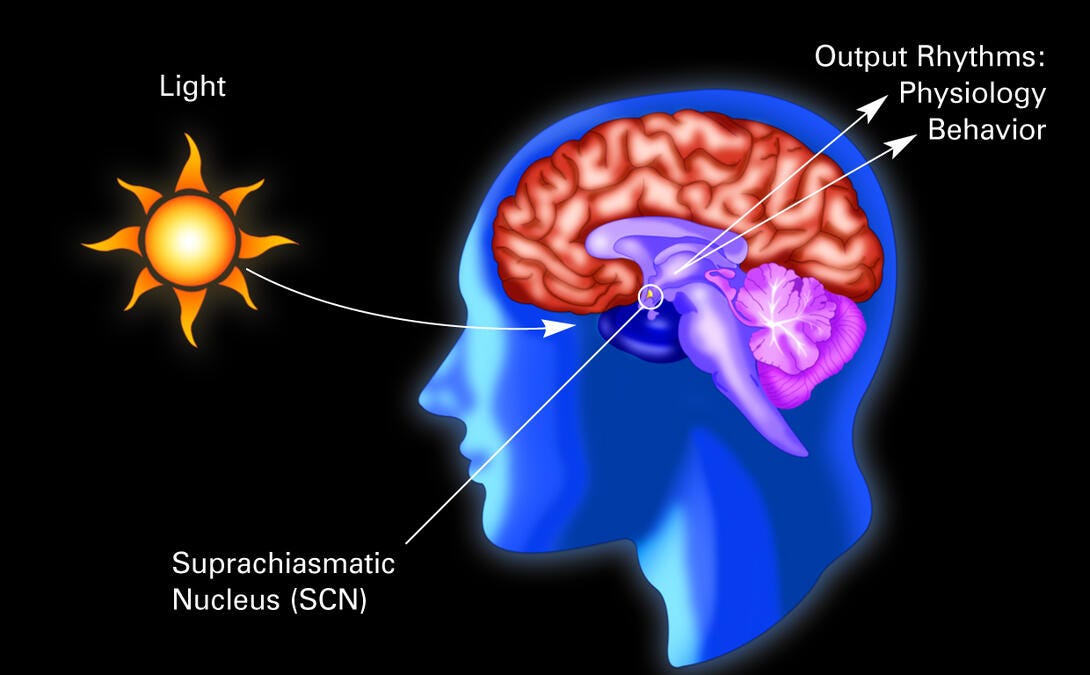
Circadian Rhythms as a Psychiatric Target: A Primer for Neuroscientists
A new comprehensive review published in NPP—Digital Psychiatry and Neuroscience examines how circadian rhythms—the body’s internal 24-hour biological clock—shape brain function and influence the development of psychiatric and neurological disorders. By integrating decades of research from molecular biology, neuroscience, and clinical psychiatry, the authors present a unified framework showing that disruptions to circadian timing affect neurotransmitter signaling, emotional regulation, cognition, and neurodegenerative processes.
Rather than viewing sleep disturbances as secondary symptoms of mental illness, the review argues that circadian dysfunction is often a causal biological mechanism contributing to disease onset, progression, and treatment response. The paper also highlights circadian-based interventions—including light therapy, melatonin, behavioral scheduling, and timed pharmacotherapy—as promising strategies for improving clinical outcomes.
Why This Matters
Nearly every cell in the human body contains a molecular clock that synchronizes physiological processes with the external light-dark cycle. In the brain, these clocks coordinate:
Sleep and wakefulness
Hormone secretion
Neurotransmitter release
Memory formation
Emotional processing
Immune function
Energy metabolism
When this internal timing system becomes misaligned—through shift work, chronic sleep disruption, jet lag, irregular lifestyles, or genetic variation—the consequences extend far beyond poor sleep. Increasing evidence links circadian disruption to depression, bipolar disorder, anxiety, schizophrenia, Alzheimer’s disease, Parkinson’s disease, and chronic pain.
This review synthesizes these findings into a clinically relevant framework for researchers and healthcare professionals.
Key Scientific Findings
Circadian Clock Genes Regulate Brain Function
At the molecular level, circadian rhythms are generated by interconnected “clock genes” that produce self-sustaining oscillations approximately every 24 hours.
These genes regulate:
Dopamine signaling
Serotonin production
Glutamate activity
GABAergic inhibition
Synaptic plasticity
Neuroinflammation
Cellular metabolism
Disruptions in these pathways alter neuronal communication, increasing susceptibility to psychiatric illness and cognitive dysfunction.
Mental Disorders Often Reflect Circadian Dysregulation
The review presents strong evidence that circadian abnormalities are deeply intertwined with psychiatric disorders.
Examples include:
Major Depression
Altered sleep timing
Reduced amplitude of biological rhythms
Abnormal melatonin secretion
Disrupted cortisol cycles
Bipolar Disorder
Circadian instability often precedes mood episodes
Irregular sleep schedules can trigger manic or depressive states
Anxiety Disorders
Dysregulated autonomic rhythms
Altered stress hormone timing
Increased nighttime arousal
Schizophrenia
Severe fragmentation of sleep-wake cycles
Abnormal clock gene expression
Impaired synchronization between central and peripheral clocks
These findings suggest that restoring circadian alignment may represent an important therapeutic strategy rather than merely treating sleep symptoms.
Circadian Dysfunction Also Contributes to Neurodegeneration
The review extends beyond psychiatry to neurological disease.
Evidence links circadian disruption with:
Alzheimer’s disease
Parkinson’s disease
Cognitive decline
Accelerated brain aging
Potential mechanisms include:
Increased oxidative stress
Impaired protein clearance
Neuroinflammation
Mitochondrial dysfunction
Reduced glymphatic waste removal during sleep
Importantly, circadian disruption may both contribute to disease progression and worsen symptoms after neurodegeneration has begun.
Light Is One of the Brain’s Most Powerful Biological Signals
Environmental light remains the primary regulator of circadian timing.
The review discusses how:
Morning bright light strengthens circadian alignment.
Evening artificial light delays internal clocks.
Blue-enriched light has particularly strong biological effects.
Light therapy has demonstrated efficacy in several mood disorders.
These observations reinforce the importance of environmental timing as a modifiable determinant of brain health.
Relevance for Pain Neuroscience
One particularly important implication concerns experimental neuroscience.
For researchers studying placebo analgesia, pain perception, or subjective experience, circadian timing may represent an underappreciated experimental variable.
Pain sensitivity itself fluctuates across the day through circadian regulation of:
Inflammatory mediators
Cortisol
Endogenous opioids
Dopamine
Attention
Emotional state
Consequently:
Experimental outcomes may vary depending on testing time.
Placebo responses may exhibit circadian modulation.
Neural circuit activity may differ despite identical experimental protocols.
Future studies incorporating circadian control could improve reproducibility while revealing new biological mechanisms underlying pain and perception.
Clinical Implications
The review highlights several interventions capable of restoring circadian alignment:
Timed bright-light exposure
Melatonin administration
Structured sleep schedules
Consistent meal timing
Exercise scheduling
Chronotherapy
Time-optimized medication administration
Rather than targeting symptoms alone, these approaches attempt to normalize the biological timing system that regulates multiple neural networks simultaneously.
Limitations
Although evidence supporting circadian involvement in psychiatric disease continues to grow, several challenges remain:
Many studies remain observational.
Human circadian biology exhibits substantial individual variability.
Genetic and environmental influences interact in complex ways.
Optimal timing protocols for different disorders remain under investigation.
Large longitudinal and interventional studies will be necessary to determine which circadian therapies produce durable clinical benefits.
Bottom Line
This review positions circadian biology as a central organizing principle in neuroscience rather than a niche area of sleep research. By demonstrating how molecular clock mechanisms regulate neurotransmission, cognition, mood, and neurodegeneration, it reframes circadian disruption as a fundamental driver of neurological and psychiatric disease.
For neuroscientists investigating pain, cognition, placebo mechanisms, or subjective experience, the review serves as a reminder that when an experiment is performed may be nearly as important as how it is conducted. Accounting for biological timing could improve experimental reproducibility while opening new avenues for precision therapies that align treatment with the brain’s natural rhythms.
Soehner, A. M., & McClung, C. A. (2026). A primer on circadian rhythms for psychiatry. NPP—Digital Psychiatry and Neuroscience, 4(1). https://doi.org/10.1038/s44277-026-00060-5


